
Pat Dempsey
Excerpts
Pat blends cinematic craft with myth and empathy, shaping stories that feel lived-in, haunting, and deeply human across screen, stage, and prose.

Shades, Indiana, book 4- Gardendale
Gardendale- excerpt
By Pat Dempsey
John Nichols pedaled his bicycle down the wooded county road, the summer heat rising off the pavement in soft waves. Cicadas buzzed in the trees, their drone steady and hypnotic. Ahead, a wrought‑iron sign arched over a gravel turnoff:
GARDENDALE STATE SCHOOL- Established 1940
He coasted beneath it. The private drive curved under a canopy of towering oaks, their branches interlocking overhead like the roof of a cathedral. Sunlight flickered through the leaves, dappling the road and John’s shirt in restless patterns.
The lane opened into a wide circular drive. Two four‑story limestone buildings stood like sentinels, red brick and white trim gleaming in the sun. Behind them, four more buildings rose in a perfect grid, pitched roofs and chimneys giving the place the look of a small, respectable college. It was beautiful. It was perfect.
John braked, hopped off his bike, and rolled it toward the front steps. A pair of patients sat quietly on a bench beneath a maple tree, one rocking gently, the other staring at the sky with a soft, vacant smile. A nurse hovered nearby, stiff as a fence post, watching everything.
He swallowed, adjusted the strap of his backpack, and forced himself toward the entrance. The tall wooden doors gleamed with fresh varnish, brass handles polished to a shine. In the glass, he saw his reflection: a skinny seventeen‑year‑old in a wrinkled shirt, hair damp from the ride. He dug into his backpack, pulled out an ill‑fitting tie, looped it around his collar, and tightened the knot. He leaned closer to check it-
A large, unshaven man stared back at him from the other side.
John jerked backward. The door swung open with a heavy groan.
“Can I help you?” the man asked. His voice was gravelly, his security uniform stretched tight across broad shoulders.
“I…I’m here to interview Dr. Larson,” John said. “For the school paper.”
The guard gave him a slow once‑over, eyes narrowing just enough to make John shift his weight. Then he stepped aside.
“Follow me.”
Inside, the lobby was cavernous and cool. Fluorescent lights hummed overhead. Terrazzo floors gleamed underfoot, reflecting the guard’s boots as he led John to a desk planted squarely in the center of the room.
“Name?”
“John Nichols.” His voice echoed down the long corridor, bouncing back at him like
someone else had said it. The guard scribbled on a clipboard, tore off a visitor pass, and handed it over.
“Second floor. Elevator’s down. You’ll have to take the stairs.”
John nodded and headed toward the stairwell. A tightness settled in his chest. He wasn’t sure if he was lucky to have landed this assignment or if he’d just stepped into something he didn’t fully understand.
From the outside, Gardendale looked like an Ivy League campus dropped into Indiana farmland. Limestone buildings, manicured lawns, white trim. The kind of place that made parents feel proud and officials feel reassured. But everyone in Shades knew better. Gardendale didn’t have students. It had patients, the outcasts, the burdens, the children families whispered about. The ones the state promised to help. And the state made big promises.
The brochures bragged about state‑of‑the‑art therapies, educational programs, vocational training. Gardendale was supposed to be a shining star, a symbol of progress, a boon for a town still clawing its way back from the collapse of the limestone industry and the long shadow of the Depression. With nearly three thousand beds and more filling every month, Gardendale had become one of the largest employers in Shades, a steady river of state funding flowing through its gates. The more patients they took in, the more money arrived. And the more the administration insisted they were doing God’s work.
Then came Walter Jameson.
No one in town knew much about him. Only that he’d lived deep in the woods for years, farther than hunters dared to go. Folks whispered about a creature stealing livestock, a shadow slipping between the trees. Kids camping out swore they’d seen him: a tall, gaunt figure watching from the tree line, silent as a stump. They called him the Hermit, a legend that grew teeth in the telling.
But the legend turned real the summer the fourth building, D Building, was going up. A young boy vanished. Days later, his remains were found in a cave. The town erupted. A manhunt swept through the woods, and when they dragged Walter out, filthy and wild‑eyed, the whole county exhaled in relief and horror at once.
His trial was still ongoing, but Dr. Larson stepped forward with a bold promise: Walter could be rehabilitated. Science could save him. Gardendale could save him. And so, Walter Jameson, the Hermit of Shades, now lived inside Gardendale under twenty‑four‑hour surveillance, a prize specimen in a place desperate to prove its worth. The town hated it. Parents locked their doors.
But the national attention was undeniable. And if Gardendale succeeded, the prestige and the money, could transform Shades forever. That was why Dr. Larson agreed to the interview. Why he wanted a clean, polite high‑school reporter to walk these halls and take pictures. Why every corridor had been scrubbed, every patient carefully chosen for display.
Gardendale needed to look safe. It needed to look modern. It needed to look like salvation. Even if the truth was buried deeper in the building, behind locked doors and quiet screams the public would never hear.
Shades, Indiana, Book 1- Valerie
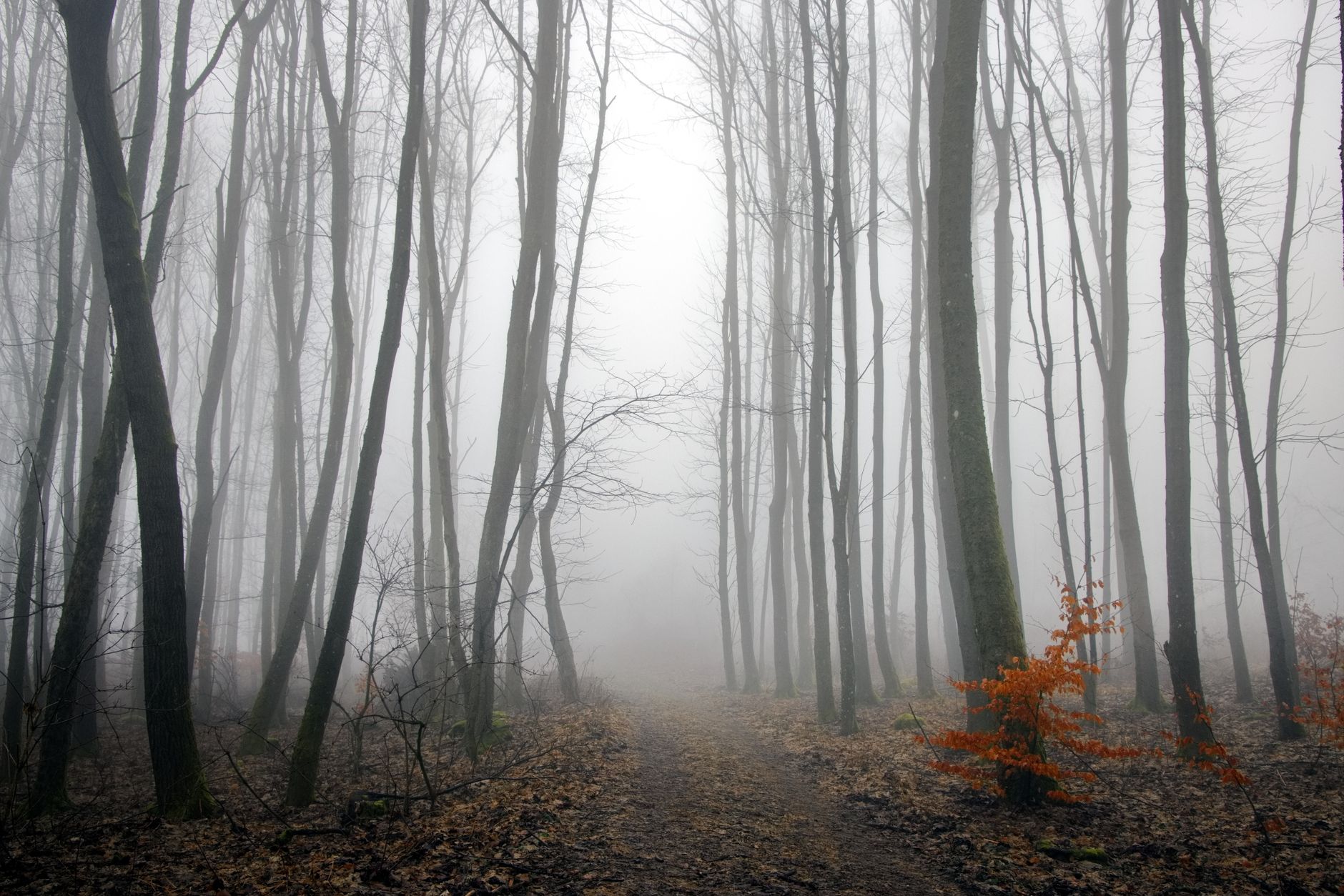
A heavy hush fell over the woods as the trees stood like they were dreaming. Somewhere deep within them, a lone flame flickered, a small campfire burning in a clearing no adult ever seemed able to find. Children huddled around it, faces blurred by shadow and smoke, their voices rising in a thin, eerie melody that didn’t belong to any hymn or schoolyard rhyme. They sang it softly at first, as if afraid the trees might hear.
“Cried for help, but nobody came…Lost forever was her name…”
The tune drifted through the branches like a ghost, innocent and wicked all at once. The fire snapped, sending an ember spiraling upward. It lifted into the night, carried by a wind that didn’t touch the leaves. The children didn’t notice. They kept chanting, eyes half‑closed, swaying as though the song itself were pulling them deeper into its rhythm.The ember rose higher, glowing like a tiny red star. Then the Woods swayed, a subtle movement, a ripple through the dark, and the ember shot forward, faster than any breeze should carry it. It darted between trunks, skimmed over roots, weaving through the forest as if guided by an unseen hand.
Ahead, a barn crouched in the shadows, its roof sagging, its boards warped with age. The ember streaked toward it, bright against the black. Then as if swallowed, the ember vanished. Darkness rushed in behind it. For a heartbeat, the Woods were silent. Then something moved inside the barn. A face appeared in the gap between the boards, gaunt, hollow, eyes glowing a sickly green. Not reflecting the light. Producing it from within. The Woods exhaled. And the night went still.
Shades, Indiana
Jose Rodriguez tipped the wheelbarrow and watched the days’ worth tumble into the ravine. His shoulders ached. His palms burned. His shirt was plastered to his back, glued by sweat and the July humidity. He’d been working since sunrise, clearing brush and hauling debris from this forgotten corner of the Woods. It felt a world away from the cattle ranch in Sonora where he used to work. Back home, the air smelled like dust and leather and sun‑baked earth. Here, everything smelled damp and old.
He glanced over his shoulder. The other two men were already packing up, tossing tools into the beds of the pickup trucks that had brought them out here. Their voices carried faintly through the trees. Jose pulled a wristwatch from his pocket, the band long gone, the face scratched but still ticking. 7:00 p.m. Night was coming fast. Southern Indiana nights always came fast in summertime.
“Jose, quitting time!” Gil called.
Jose nodded, pushing the empty wheelbarrow toward the truck. The job wasn’t bad. He’d worked worse, sewers, floors, asphalt in the summer heat. Work was work. It was the people who made it hard. Ty Griffith spat in the dirt as Jose passed. Ty didn’t bother hiding his contempt. Didn’t bother hiding anything. To him, Jose was the wrong kind of man from the wrong kind of place. Legal, illegal, it didn’t matter. Ty had already decided what Jose was. Gil jingled his keys.
“I’m heading home. Finish loading up and drop the truck at the office.”
Ty groaned. “Come on, man! At least take him with you.”
Jose lifted a wheelbarrow into the truck bed, pretending not to hear. Pretending not to care. Gil just shook his head and climbed into the other pickup. The headlights swept across the clearing as he pulled away, illuminating the field and the dense wall of trees beyond it.
“All right,” Ty barked. “Pick up the rest of the stuff and let’s go!”
Jose turned away. “I’m taking a piss, pendejo.”
Ty stiffened. “What did you say?” Jose didn’t answer. He kept walking, letting the Woods swallow the sound of Ty flipping through his battered Spanish‑English dictionary.
“Pen‑day‑oh… that son of a bitch!”
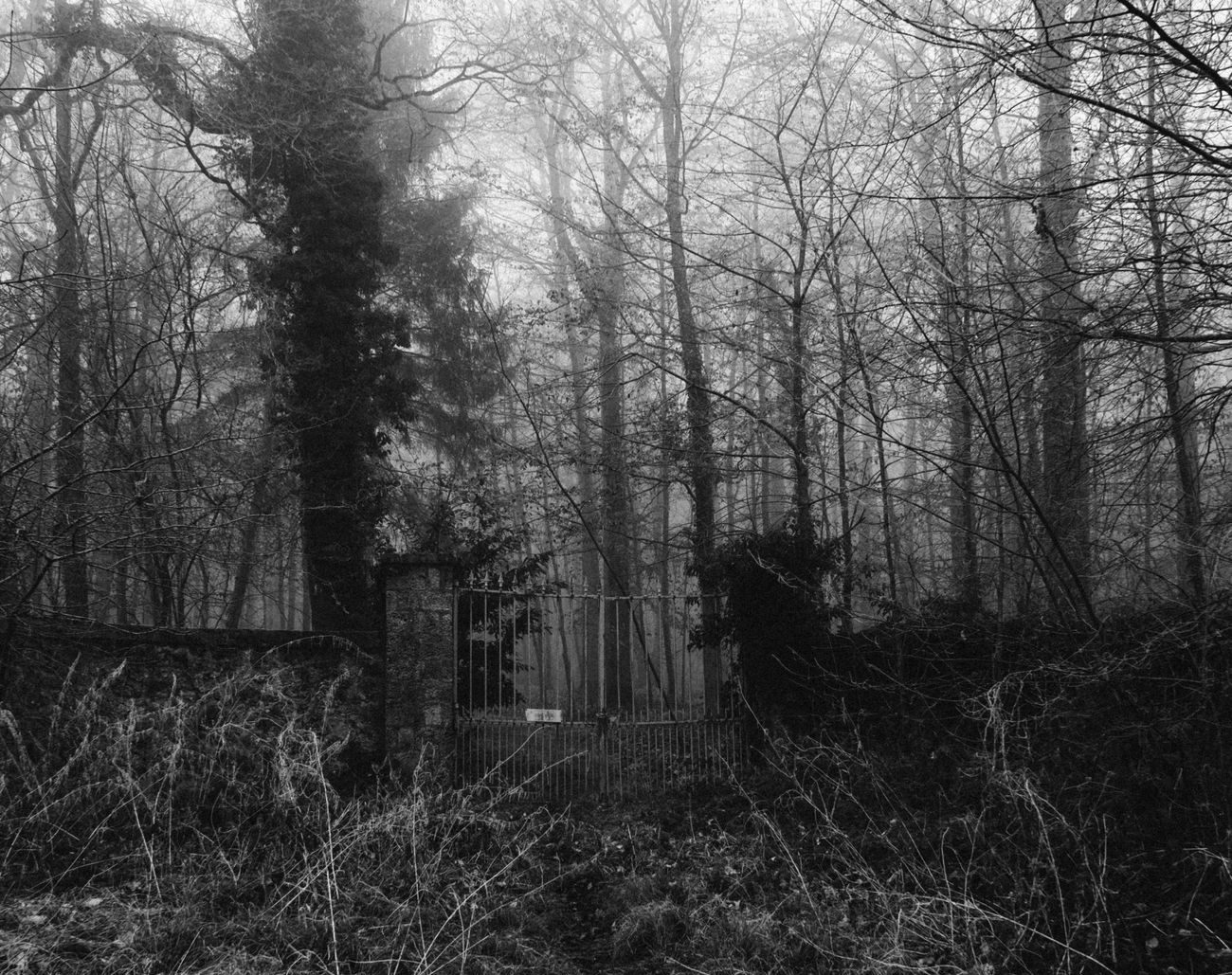
Jose kept walking until the truck was just a silhouette behind him. The Woods felt cooler here, quieter. He unzipped his trousers, then stopped. A faint blue glow shimmered on the ground about ten yards away. He frowned. Lightning bug? Reflection? Something dropped from the truck? He stepped toward it. The light vanished. Jose squinted, scanning the ground. He crouched, brushing aside weeds. Beneath them, he felt the outline of something man‑made, stone, maybe. A foundation? Old, forgotten, swallowed by the Woods. He pressed his foot down. The ground gave slightly, hollow beneath the surface.
“What the hell…?” He knelt, fingers tracing the edge of a metal grate. He tugged. It didn’t budge. Behind him, the truck horn blared, Ty, impatient as always. Jose sighed and pushed himself to his feet. A shape moved across the foundation.
Jose froze.“Quién anda ahí?” he called. “Who’s there?” Silence. The Woods held their breath. Jose took a step back. The figure rushed behind him, fast, silent, impossible. A cold shiver shot up his spine. He turned, heart pounding. “Hey! Show yourself!” Nothing. Just trees. Just shadows. Just the feeling of being watched. Jose backed away, pulse hammering. He needed to get back to the truck. He needed to… His foot caught on something. He stumbled. The world tilted. He hit the ground hard, breath knocked from his lungs. He tried to call out to Ty, to anyone, but no sound came. His chest burned. His vision blurred. Above him, the Woods swayed gently, as if whispering to themselves. Jose’s eyes fluttered. He thought of home. Of his mother’s voice. Of the ranch. Of the sun. Then everything went dark.
Shades, Indiana, Book 2- The Witching Woods
Shades, Indiana – 1835
Hoosier Night Watch Club was formed last summer, when the days were long and the nights warm and the Woods didn’t feel quite so close as they do now. Eli had found an old militia badge in his father’s trunk, rusted, bent, but still shining enough to feel important. He’d held it up to the others and declared they were starting a watch. A real one. Like the men in town who patrolled the ridge during harvest season.
Joe had loved the idea instantly. The twins, Caleb and Silas, followed whatever Joe did. And little Jonah, well, Jonah just wanted to belong. They’d made rules. They’d made a secret handshake. They’d made a pledge, whispered around a candle stub in Eli’s barn:
“We watch the night so the night don’t watch us.”
It sounded brave. It sounded grown‑up. But the truth, the truth none of them said out loud was that the club existed because of the Woods. The boys pretended the club was about adventure, exploring the creek bed, climbing the ridge, sneaking out after dark to prove they weren’t scared of anything. But the club was really about this moment.
Standing at the edge of the clearing. Fire crackling behind them. The Woods crouched in front of them like a living thing. The boundary marker stood where the grass ended, a massive tree stump, fifteen feet tall, carved into a grotesque wendigo‑like figure. Jonah has seen four of these markers carved out of trees at different points around the perimeter of the woods. Others told him there were as many as eight. They were made by different native American tribes that lived in the area at different times like the Potowatami and Miami. But the message and intention was the same, keep out, don’t go into the tree line…especially at night. The marker’s skeletal face leered toward the Woods, teeth bared, as if warning or guarding. Jonah had seen it in daylight once. It was bad then. It was worse now.
Eli nudged him with an elbow. “How about you, Jonah? You afraid? Bet you won’t touch it.”
Jonah forces a swallow. His throat felt too small. “I’m not scared.”
Joe stepped forward, twelve and trying too hard to be thirteen. “Then go past it. Just one step. That’s the dare.”
A branch snapped somewhere in the Woods, clean, sharp, like something stepping on purpose.Jonah stood before he could think better of it. His legs felt hollow, but he didn’t want them to see that. He brushed dirt from his palms, pretending it was just dust and not sweat. The others fell silent, watching him the way boys watch someone about to do something stupid or brave, and not caring which it is, as long as it isn’t them. He walked toward the marker. Each step felt heavier than the last, like the ground was trying to hold him back. The breeze grew stronger, pushing against him, coming from the Woods instead of the open field. That wasn’t right. Wind wasn’t supposed to move like that.
He reached the stump. The carved face stared down at him, hollow‑eyed, hungry.
“See?” Jonah said, turning back toward the fire. “It’s not scary.” A voice drifted out of the Woods.
“Jonah.“
He froze. The sound wasn’t loud, it was soft, almost gentle, but it slid under his skin like a cold hand. He turned toward the boys. “Something said my name.”
Eli laughed too quickly. “That was Joe.” Eli looked at Joe. “That was you, right?”
Joe hesitated. “Um… yeah.”
Eli shoved him. “Keep going, Jonah. Or are you scared?”
Joe echoed him, but his voice cracked. “Yeah. Are you scared?”
Eli punched Joe in the shoulder. “Shut up.”
Jonah shook his head, but his hands were fists at his sides. Eli felt something twist in his chest, guilt, maybe. Or the sick thrill of being the oldest, the one who pushed the dare too far. He didn’t want Jonah to go in. Not really. But he couldn’t say that. Not with the other boys watching. So, he lifted his chin again, forcing the bravado back into place.
“It’s just trees,” he said. “Go on. Touch the stump. Step past it into the trees. Prove you’re not a baby.”
The Woods seemed to lean closer, listening. Jonah took an audible deep breath, then stepped forward. Eli’s stomach dropped. He didn’t know why. He didn’t know how. But he knew deep down, in the place where fear lived that once Jonah crossed that line, something would change. Something would happen. Something the boys wouldn’t be able to take back.
Jonah took a breath, squared his shoulders the way kids do when they’re pretending to be brave, and stepped past the marker. The air felt different now, charged, expectant. Like the moment before lightning strikes. Then he stepped Into the Woods. Into the dark. Into the stories he was told.
Eli felt the night shift around them, subtle as a held breath. And for the first time, he wished he’d hold the truth. He was afraid. They all were.
The wind growled a low, animal sound then stopped all at once. The fire behind Jonah blew out in a single breath. Jonah’s heart hammered. “It’s just-”
The moment Jonah steps into the tree line, the Woods swallow the sound of the boys behind him. One heartbeat he can still hear Eli laughing, Joe whispering something sharp followed by some nervous laughter. The next, Silence. Not quiet. A silence he never felt before, thick and heavy stillness that presses against his ears like warm hands.
Jonah turns back toward the clearing, the same clearing he walked into the trees. There is no clearing. The stump, the firelight, the boys, Gone.

The Sailfish- A screenplay (excerpt) coming…
Sample to come…

SOULMATES- A stageplay
I seemed to have loved you in numberless forms…
In numberless times…
In life after life,
in age after age, forever
-Rabindranath Tagore
ACT 1
SCENE 1
[Lights up on a living room. A woman in her 30’s sits on a couch, stares into photo album. A man sits at a nearby table, writes in a journal.]
WOMAN
I love these pictures. My mom would talk about snow in winter. Wouldn’t it be amazing to feel the snow?
MAN
You get chilly when it drops below 60 degrees. It used to get below zero in some areas in the states.
(He gets up and snuggles her)
WOMAN
I know that smarty pants. But doesn’t it look magical?
MAN
Yes, it does. You know what else is magical?
This.
(He kisses her deeply.)
WOMAN
(smiling)
Very magical.
MAN
What’s wrong?
WOMAN
What do you mean?
MAN
C’mon. You know I always know when something is wrong. I can feel-.
WOMAN
I’m pregnant.
MAN
Wow. Okay. Wow. Why didn’t you tell me?
WOMAN
I just needed to process it myself and-
MAN
How do you feel about it?
WOMAN
it’s weird. You spend your life trying not to get pregnant and now… how do you feel about it?
MAN
I think it’s great. It’s mine, right?
WOMAN
Funny.
MAN
Are you sure?
WOMAN
That it’s yours?
MAN
No, that you’re pregnant.
WOMAN
One hundred percent. Do we want to bring a child into this world-
MAN
As long as we are in it together, we’ll make it work.
WOMAN
You really want this?
MAN
I want us. I want you. And if a baby is part of us, then yes, I want that too. But do you want this?
WOMAN
Yes.
MAN
Then we must dance.
WOMAN
Okay?
[He stands up and walks to the stereo. He turns up the radio. A slow ballad plays. He walks back to the couch and pulls her to her feet.]
MAN
Do you want to know what the problem has been with our country?
WOMAN
The one problem? Just one?
MAN
People forgot how to dance together.
(He pulls her close.)
WOMAN
Oh?
MAN
Yeah. Nobody dances together. Everyone just dances alone.
WOMAN
I would dance with you through eternity.
[They slowly rock back and forth to the beat of the music. They smile and stare into each other’s eyes.]
MAN
I can’t believe you thought you could keep this from me.
WOMAN
You always know what I’m thinking.
MAN
I’m telling you, we’ve loved each other before we knew each other.
WOMAN
I love that thought.
(They kiss.)
WOMAN
What names do you like?
MAN
For the baby?
WOMAN
No for the dog. Yes, for the baby.
MAN
I like Isabella for a girl.
WOMAN.
Oh, I like that too.
MAN
What about a boy?
WOMAN.
What was your father’s name?
MAN
John.
WOMAN.
Yeah, need something with a little more bite to it. Michael?
MAN
Really? Yeah. Of course, I like Michael.
[The beautiful moment is broken up by an emergency alert over the radio followed by an announcement]
BEEP! BEEP! BEEP!
RADIO ANNOUNCEMENT
Please be advised that there has been a Code yellow security breach at sector 6, a code yellow security breech at sector 6. Stay on this channel for more details to follow.
MAN
Oh well. So much for that.
[She walks into the adjacent dining room.
A large map of North America covers the wall. A grid is superimposed over the top of the Canadian provinces and United States with numbers 1 to 24.]
WOMAN.
They said sector 6 right?
He follows her into the dining room.
MAN
Way east towards the Atlantic. Here.
(He points to the map on what was formerly known as Florida.)
WOMAN.
I know where sector six is! That feels too close. No?
MAN
Don’t worry. We have these all time. Sometimes they’re animals tripping the system-
WOMAN.
But we rarely get them on the perimeter like this-
MAN
That is true, but there isn’t anything to do until we get the details. So how about I make dinner?
WOMAN.
Ok. I allowed myself to dream that things might be different. but back to reality right?
(He walks over a gently wipes a tear from her face)
MAN.
You’re not dreaming.
(He places his hand on her stomach.)
This is reality.
(He takes her face into his hands and kisses her slowly)
End of SCENE 1

